Introduction
Rocket.Chat is an open-source communication platform offering robust team collaboration and customer engagement solutions. With its strong focus on security, compliance, and flexible deployment options, it serves as a powerful alternative to proprietary tools like Microsoft Teams, especially for organizations prioritizing data control and customization.
Features
Rocket.Chat provides a comprehensive suite of features designed to enhance communication and productivity:
- Flexible Deployment: Choose between cloud, on-premises, or isolated network deployments, giving you full control over your data environment.
- Advanced Security & Compliance: Benefit from end-to-end encryption, multi-factor authentication, access controls, and compliance with standards like HIPAA, GDPR, FINRA, ISO 27001, and SOC 2 Type 2.
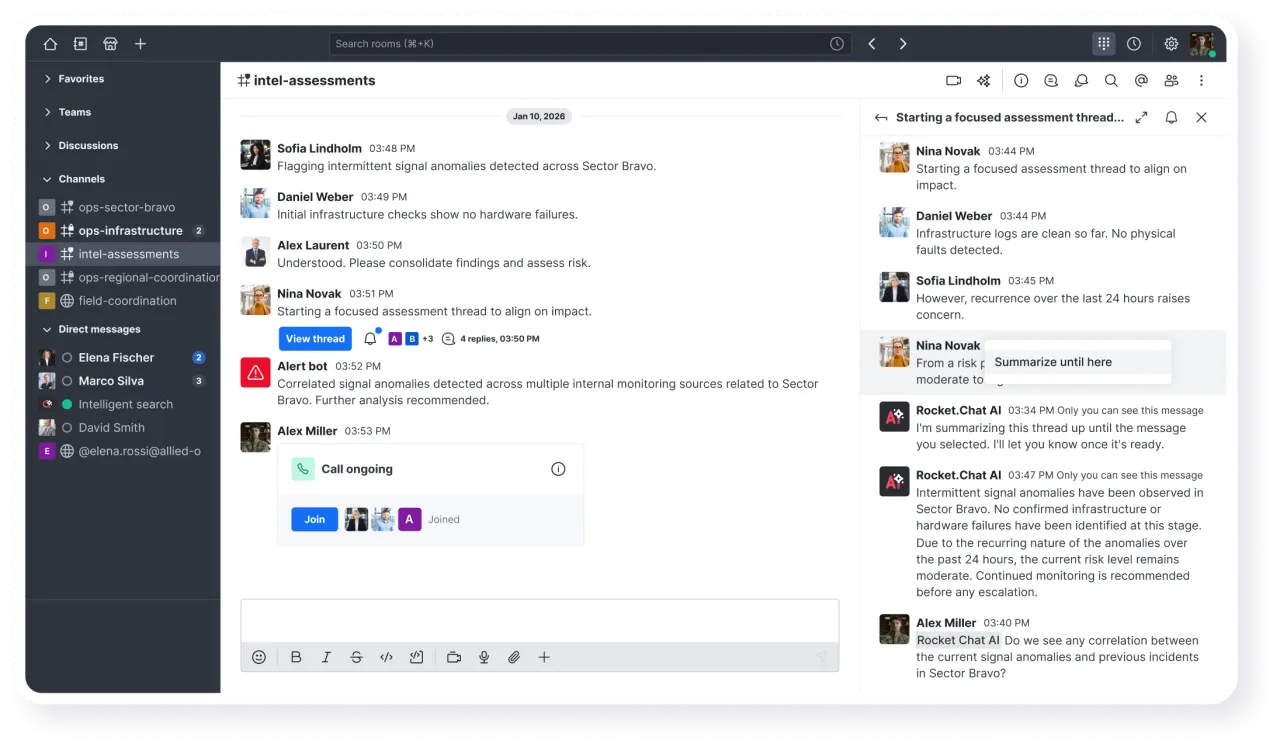
- Rich Communication: Engage through voice, video, and text, with support for threaded conversations, file sharing, and real-time message translation.
- Extensive Customization: The open-source nature allows for significant customization, tailoring the platform to your specific organizational needs.
- Integrations & APIs: Seamlessly connect with over 100 popular workspace applications and leverage APIs and frameworks to build secure in-app chat experiences.
- Analytics & Reporting: Gain insights into customer service performance with robust analytics and reporting tools.
- Project Management & Remote Work: Facilitate effective project management and remote team collaboration with a unified communication hub.